
Charitable giving gives a business a way to contribute to the communities around it. It can also create meaningful opportunities for employees and help customers understand what the company values.
Those benefits start with the commitment itself. We believe a useful corporate philanthropy program should begin with a real need, a credible partner and a contribution the business can sustain. The marketing follows from explaining that work accurately.
Choose a cause that fits your company
Look for a connection between the cause and your mission, products, employees or local community. A natural fit makes it easier to explain why the relationship matters and how your business can help.

That contribution may involve funding, products, professional skills or volunteer time. Ask the organization what would be most useful before deciding what your team will offer. A donation that meets a specific need can be more valuable than an elaborate campaign that creates extra work for the recipient.
Establish the practical details together: the commitment, timing, responsibilities and how both organizations will describe the relationship. If the business intends to use the organization's name, logo or stories, agree on the permissions and review process.
Give customers a clear reason to care
A charitable partnership can give customers another way to connect with your brand. Treat that as an opportunity to build understanding, without assuming that support for a cause automatically produces loyalty or sales.
Explain the work in concrete terms. Who is the partner? What is the business contributing? What will that contribution support? When will it happen?
If purchases are part of the campaign, make the arrangement easy to understand. State the applicable products, dates, donation amount or calculation, and any limits. Have the appropriate reviewers confirm the terms before the promotion goes live.
Keep the emphasis on the organization's work and the people it serves. Ask for permission before sharing personal stories or images, and use the organization's guidance on respectful language. The people benefiting from a program should have a say in how their experiences are presented.
During a crisis, begin with what the affected community needs. Coordinate the response before promoting it, and avoid making promises the business cannot fulfill.
Make participation meaningful for employees
Giving can become a shared team experience when employees have useful ways to participate. Ask which causes and activities matter to them, while keeping participation voluntary.
Consider how different people can contribute. An in-person event may work well for some employees; others may prefer a skills-based project, a remote activity or a donation program. Plan around workloads and access so involvement is practical.
Be clear about any paid volunteer time, matching contribution or company support. Afterward, ask employees and the charitable partner what worked and what could be improved.
Employee engagement is worth understanding on its own terms. Avoid assuming that participation guarantees better retention, productivity or morale, or that every generation wants the same experience.
A local example from our agency's history
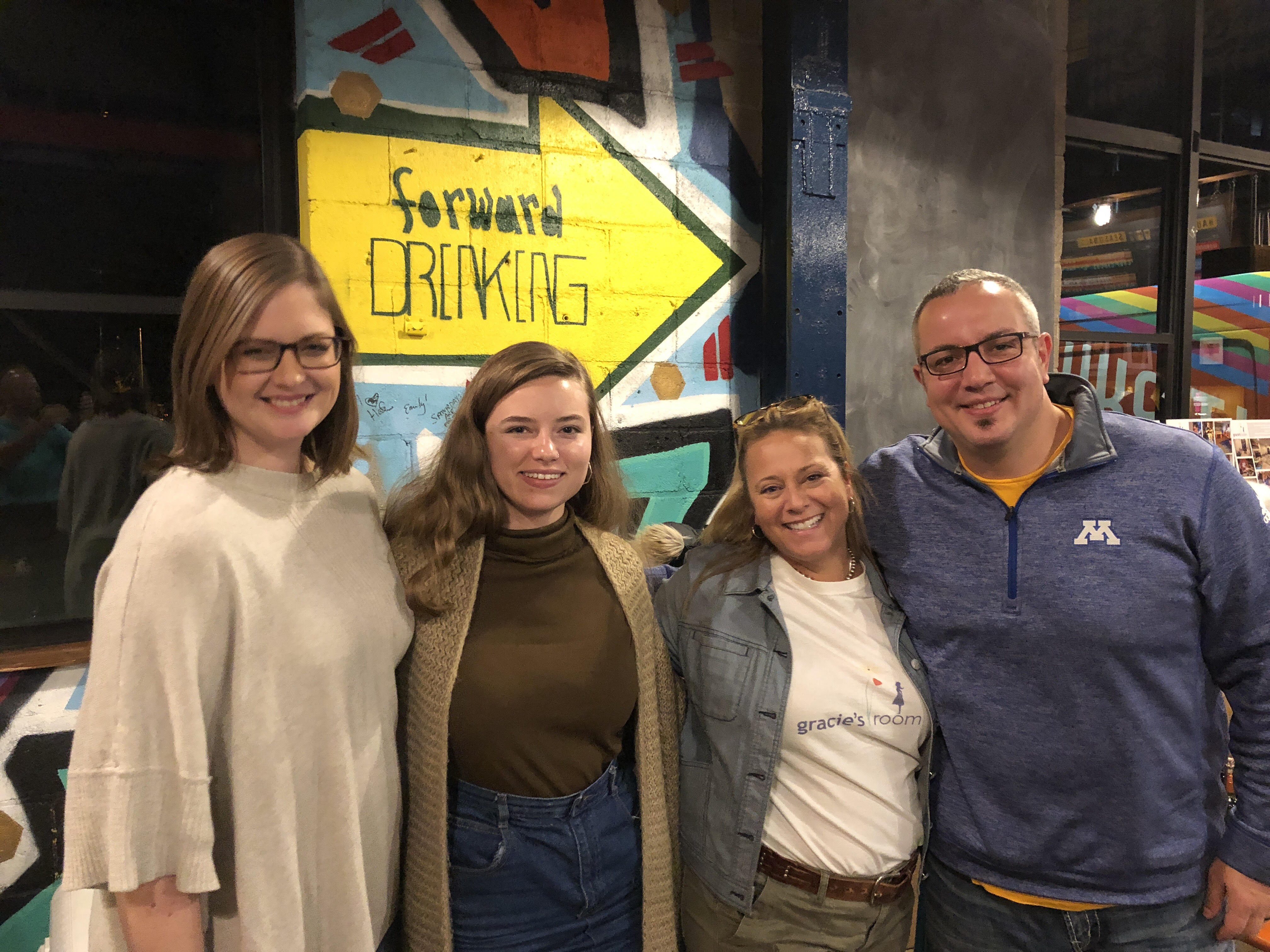
In December 2017, we described our support for Gracie's Room, a Minneapolis-based nonprofit that created custom room makeovers for children dealing with life-threatening illnesses. The article included a photo of Ashley Larson, Taylor Strege, Annie Mies and Rick Gardiner at a Gracie's Room event.
That local focus illustrates a useful starting point: look for a community connection where the team can understand the need and make a relevant contribution. The example records our involvement at that time.
Measure the contribution and communicate what happened
Agree with the partner on a manageable way to report progress. Depending on the program, that might include funds delivered, volunteer hours completed, products provided or work the contribution made possible.
Separate those measures from the business's marketing results. Attention, participation and customer feedback may help improve communication, but they do not replace evidence that the charitable commitment was fulfilled.
Share an update after the activity, credit the partner and acknowledge the people who contributed. If the program will continue, explain the next commitment clearly.
The strongest story is the one the work can support. Our approach to brand and influencer relationships offers related guidance on choosing partners and setting shared expectations. If a charitable collaboration is part of a broader partner campaign, talk with our team about how to communicate it clearly.